
Home Lift Drives · Australia

Electric vs Hydraulic Home Lifts

Australian home lifts run on one of two drives. Electric traction raises the cabin on steel ropes balanced by a counterweight. Hydraulic raises it on a piston driven by an electric pump. Lift Shop builds both, installed to AS 1735.18 with In-Cabin Self Rescue as standard, across more than 12,000 homes since 1996.

Neither drive is better than the other. Each suits different conditions - how many levels you are serving, whether you are building or retrofitting, and where the shaft sits within the house. This page explains how each one works and exactly where they differ.

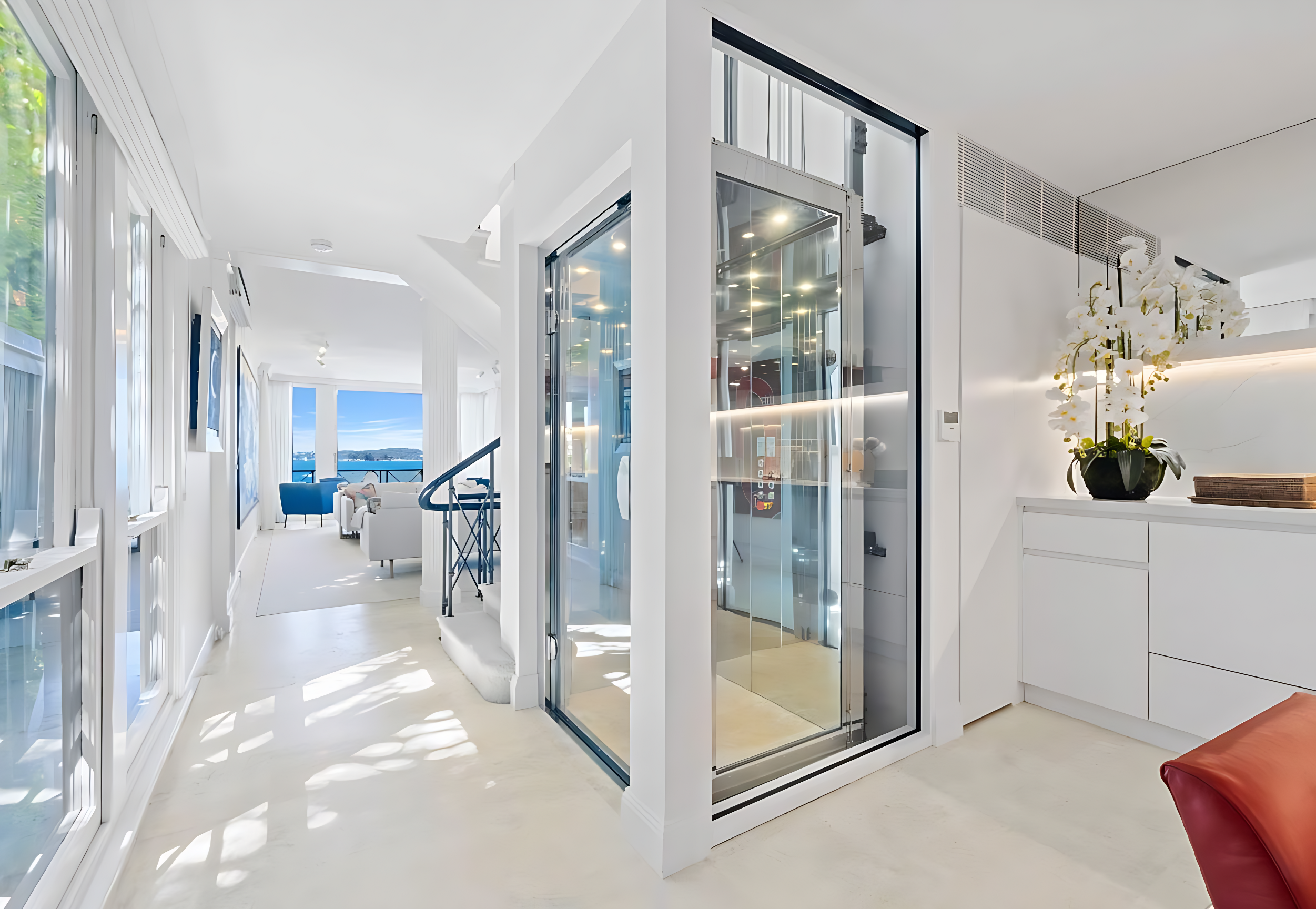
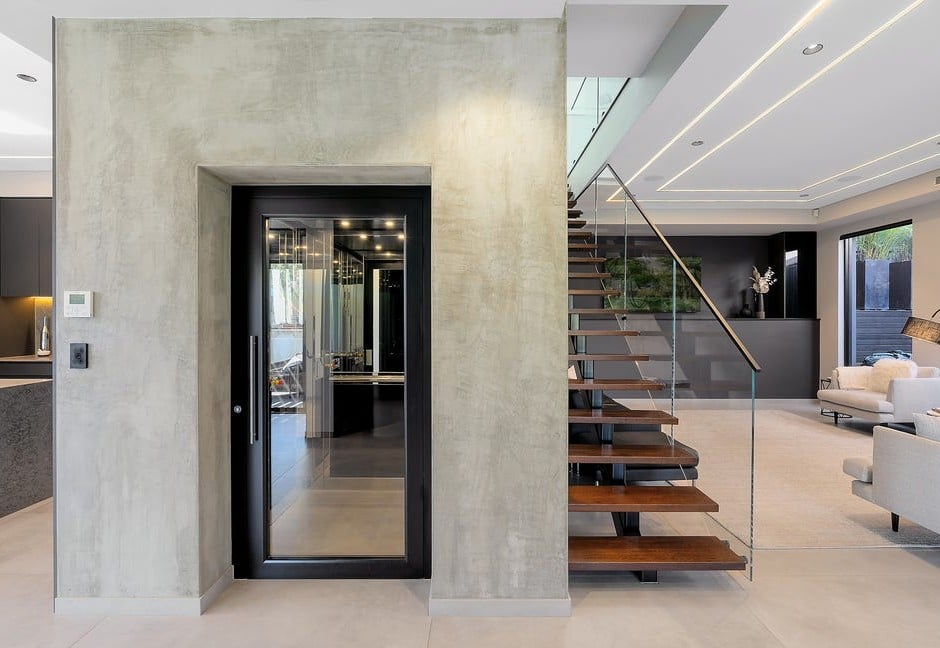
Home lifts on display at a Lift Shop showroom, where both drive types run side by side

How each drive works

The difference is mechanical. Traction pulls the cabin up on ropes, with a counterweight carrying most of the load. Hydraulics push the cabin up on a piston using sealed fluid. Every other difference between the two follows from that single distinction.

Ropes and counterweight

Electric Traction

Steel ropes run over a gearless motor at the head of the shaft, with a counterweight on the opposite side. Because the counterweight carries most of the cabin's mass, the motor only moves the difference between them.

That keeps power draw and noise low, and allows higher speeds. The motor sits within the shaft, so no separate machine room is needed, and traction handles continuous use without a duty limit.

Piston and sealed fluid

Hydraulic

An electric pump drives fluid into a sealed circuit, extending a piston that raises the cabin. The pump runs on the upward trip only. Descent uses gravity through a controlled valve, which is why a hydraulic lift lowers itself to a landing when power is lost.

Fewer components sit inside the shaft, and the design tolerates structures that are not perfectly square. A slim cabinet near the shaft houses the pump unit.

Feature comparison

The two drives differ most on noise, energy use and structural tolerance. They are identical where it matters most: both carry In-Cabin Self Rescue as standard, both are serviced twice a year, both reach six levels, and both are covered by the same 8-year Lift Shop warranty.

Feature Electric Traction Hydraulic
Drive mechanismTraction ropes with counterweightPiston with sealed hydraulic fluid
Levels served2 to 62 to 6
Speed0.30 to 0.60 m/s0.30 m/s
Time between two floors5 to 10 seconds10 seconds
Capacity4 to 7 persons350 to 450 kg5 persons300 to 400 kg
Noise levelVery quiet, under 50 dBPump very slightly audible on each trip
Energy usageDraws power in motion only; solar compatiblePump runs on each upward cycle
Pit depthFrom 150 mm270 mm on gearless modelsFrom 150 mm
Headroom2500 to 2750 mm2400 to 2600 mm
Machine roomNot requiredNot requiredSlim cabinet near the shaft
Power supply15 to 25 A single-phase32 A single-phase
Retrofit toleranceRequires precise shaft and structural planningForgiving of existing and irregular structures
Duty cycleContinuous use, no hourly limitDesigned for up to 30 trips per hour
Self rescueIn-Cabin Self Rescue, battery backedIn-Cabin Self Rescue, standard
Servicing frequencyTwice per yearTwice per year
Warranty8 years or 80,000 trips, included as standard
Australian StandardAS 1735.18, lifts in private residences

Figures cover the current Lift Shop A, C and E Series. Exact dimensions for your home are confirmed at a site assessment.

The four drive types

Four drives are sold into Australian homes: electric traction, hydraulic, winding drum and screw drive. Winding drum and screw drive are the least expensive and are built for two to three levels. Hydraulic is the most economical of the full-height drives over short travel. Electric traction costs more initially and rises most gently as levels are added.

Which drive to use is the most confused question in this category, partly because a supplier who carries only one will naturally recommend it. The curve here shows the shape of the cost relationship as travel increases. It is not a price list.

Lift Shop supplies electric traction and hydraulic drives. We do not supply winding drum or screw drive lifts, which are engineered for shorter travel and lighter duty than the eight-year warranty we place on every lift.

$$$ $$ $ COST 2 3 4 5 6 FLOORS
Electric traction Hydraulic Winding drum Screw drive

Most Lift Shop clients invest $60,000 to $120,000. See what a home lift costs for the full breakdown.

It is time, not speed

Speed in metres per second tells you very little. What you live with is how many seconds you stand waiting. At 0.15 m/s a three-floor trip takes 40 seconds. The same trip takes about 21 seconds at 0.30 m/s and about 11 at 0.60. Beyond about 35 seconds, a lift starts to feel broken.

Floors Average travel 0.15 m/s 0.20 m/s 0.30 m/s 0.60 m/s
23.0 m20.015.010.86.2
36.0 m40.030.020.811.2
49.0 m60.045.030.816.2
512.0 m80.060.040.821.2
Too slow Acceptable in a home What people expect

Times are in seconds and include door operation, acceleration and deceleration. Faster lifts also need more pit depth and headroom for acceleration, so faster is not automatically better. Lift Shop offers home lifts at 0.30 and 0.60 m/s.

Hydraulic oil: what people get wrong

The most common question asked about hydraulic home lifts is whether the oil smells. It does not. The fluid is sealed, it only smells when it overheats, and overheating is engineered out. Lift Shop has supplied and installed more than $500 million of hydraulic lifts over the last 24 years, and oil smell is not something our clients raise.

The oil is sealed, like brake fluid

The fluid sits in a closed system the same way brake fluid sits in a car. It is pumped from a tank into a sealed circuit that lifts the cabin, and returns to the tank in reverse. It is not exposed and it does not burn.

Heat causes smell, and heat is designed out

Oil only smells once it gets hot, which needs the pump running more than about thirty times an hour. A thermal overload sensor in the tank senses the heat and shuts the machine down for safety before that point. A private residence never reaches that zone.

If it ever does, we replace it

If you are a regular Lift Shop service customer and your oil does start to smell, we replace it at no extra charge. Our promise is your guarantee that oil smell is not an issue.

A proven choice, not an outdated one

Hydraulic drives have been the preferred solution for low-rise limited-use lifts for more than thirty years. They remain ideal for a private residence used within their duty cycle, and they are a great solution in the right house.

Installing a home lift

A Lift Shop home lift takes four to six months from order to handover, and our FastTrack service can bring that to twenty weeks. We handle design drawings, builder liaison, scaffold and safety coordination, so the lift arrives as a managed project rather than a delivery.

The structural requirements are modest and similar in principle for both drives: a pit from 150 mm, headroom between 2400 and 2750 mm depending on series, and single-phase power between 15 and 32 amps. No three-phase upgrade is needed in the great majority of Australian homes.

If you are still building, forming the shaft during construction costs far less than engineering one in later. Glass shafts and self-supporting steel structures are both possible. See building your lift shaft for the detail your builder will need.

A Lift Shop installation in progress with purpose-built aluminium scaffolding

Maintenance and servicing

Both drives are serviced twice a year by Lift Shop technicians, which is also the condition of the 8-year warranty. The first year of servicing is included with every new lift, with tailored plans after that. Lift Shop completes around 20,000 service visits a year across 10,000 lifts under care.

A hydraulic lift adds annual fluid and seal checks to the schedule, which is what keeps the sealed system sealed for decades. An electric traction lift has fewer consumables and correspondingly less to check, though rope condition and brake function are inspected at every visit.

Our technicians are Lift Shop employees in every state, never subcontractors, so the person who services your lift works for the company that warrants it. A 24-hour assistance line covers both drives.
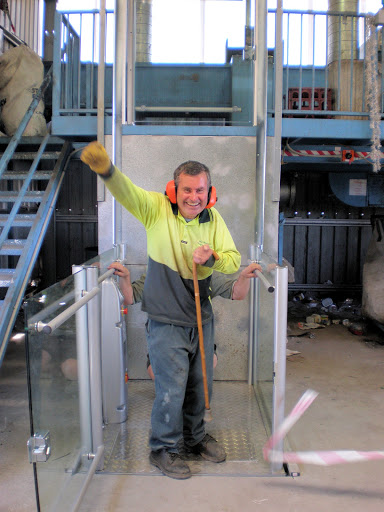
A Lift Shop technician servicing a home lift

Why Choose Lift Shop

Lift Shop is Australia's largest independent home lift specialist, established in 1996. We supply both drive types, which means our recommendation follows your house rather than our stock list. Every lift carries the same 8-year warranty and is installed and serviced by our own technicians.

Download Brochure