
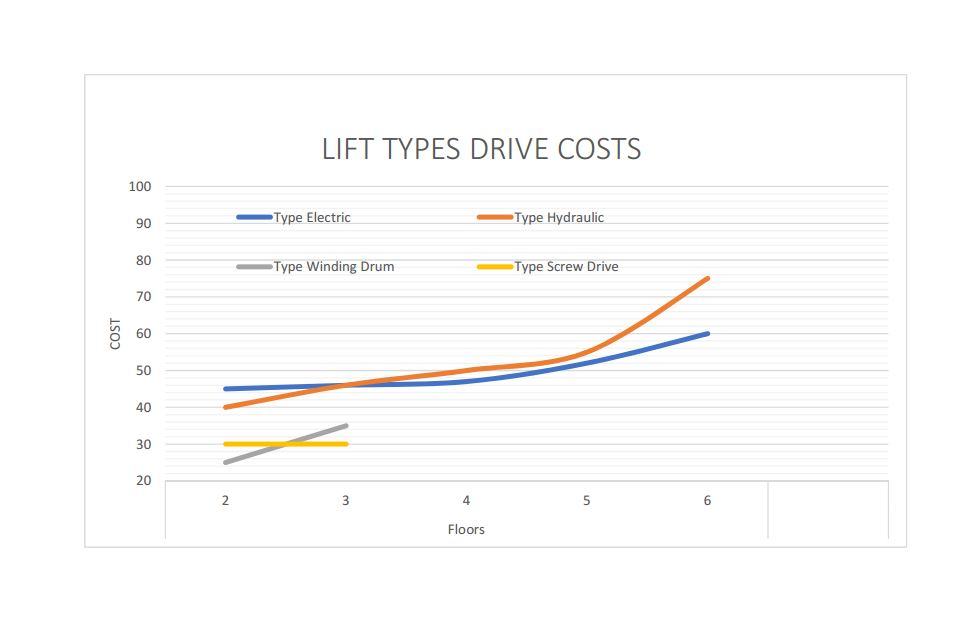
Since 2006, Lift Shop has installed more than 10,000 lifts across Australia. We have seen every configuration, every constraint and every question. One persistent myth: electric is always superior. That is not necessarily true.
The right choice is not about trends. It is about fit. Fit for your space, your usage, and your future needs. That is why we provide both hydraulic and electric traction models—and guide every customer to what works best.
Lift Shop delivers complete vertical transport systems: design drawings, builder liaison, safety coordination and seamless delivery—backed by our non-negotiable 8-year warranty. From 1 July 2025, every new lift includes up to 80,000-trip cover on parts and labour, provided serviced at least twice annually by our own technicians. This warranty is not optional, it is standard in metro areas (applies to all our hydraulic and electric lifts).
Our process ensures transparency with no hidden costs—your quote is your final price, including all standard installations without surprises. We also offer flexible planning and FastTrack installs from as little as 20 weeks.
Want to make an informed comparison? Read below or contact us—we’ll help without bias, tied only to what your project needs.
Hydraulic lifts employ a piston and sealed fluid reservoir that moves the cabin with controlled force. This method offers robust support and reliability, even in complex retrofit conditions.
Electric gearless traction lifts operate via cables, counterweights and high-precision motors, producing an exceptionally smooth and silent ride.
Hydraulic lifts draw power only when the pump runs, but the pump is active each trip. Electric lifts consume energy only during motion.
Hydraulic models typically require deeper pits (150-270 mm) and cabinet space. MRL electric models work with shallow pits and no machine room—making them ideal for modern builds and aesthetic integration.
| Feature | Electric Traction | Hydraulic |
|---|---|---|
| Drive Mechanism | Geared or Gearless | Piston & sealed hydraulic fluid |
| Noise Level | Very quiet (<50 dB) | Moderate – pump whirr at each trip |
| Energy Usage | Low consumption; solar ready | Pump use each cycle; higher running cost |
| Self Rescue | Yes – battery backed – ICSR | Yes – ICSR standard in all models |
| Pit & Space Requirement | MRL; Pit (190-270 mm), no machine room | Pit (150-270 mm) & small cabinet |
| Servicing Frequency | Twice per year | Twice per year |
| Lifetime Value | High – low running & service costs | Good – strong with regular upkeep |
| Capacity | 4-7 persons (350-450kg) | 4-6 persons (300-400kg) |
| Speed | 0.29-0.60 m/s | 0.30 m/s |
| Max Levels | Up to 6 | Up to 7 |
Installing a home lift typically takes 4-6 months lead time. We handle everything from design to handover, including scaffold provision and builder coordination.
Key requirements: Pit depths from 150-270mm, headroom 2400-2950mm, single-phase power (25-32A). For future-proofing, consider building the shaft during home construction to reduce costs and avoid later engineering needs. Options include glass shafts or self-supporting steel structures.
Our FastTrack service can accelerate installs to 20 weeks. Visit our showrooms to see demos and plan your setup.
Regular maintenance ensures longevity and warranty validity—twice annually by our technicians. First three years are free, with tailored plans thereafter.
For hydraulics, annual fluid and seal checks prevent issues. Electrics have fewer moving parts for minimal upkeep. Our 24/7 rescue service and low breakdown rates keep things reliable.
Lift Shop is Australia’s only multinational home lift specialist. Established in 1996, we pioneered vertical movement solutions designed around style, safety and longevity—for over 28 years. Our lifts are exclusive to us, and our systems are backed by the largest home lift service team in the country.
We limit our workload to maintain quality. We design for longevity—not future service revenue. We believe real safety and real support require standards, not shortcuts. And that is backed by consistent five-star reviews and industry recognition.
Hydraulic lifts use an electric pump to push fluid into a cylinder, raising the cabin directly. Electric traction lifts use a motor to drive ropes or belts over a pulley, raising the cabin via a counterweight system. This fundamental difference affects noise, energy use, pit depth, and space requirements.
Hydraulic lifts (our A-Series) are compact and suit retrofits, operating at 0.30 m/s on 32A single-phase power. Electric traction lifts (C and E series) are quieter (under 50 dB) and require no machine room. Each drive type has advantages depending on your home layout.
Our hydraulic A-Series is the best choice for retrofits. It requires a minimal pit depth of just 150 mm, fits into tight existing shafts, and operates on standard 32A single-phase power available in most Australian homes. The compact footprint makes retrofits faster and less disruptive.
Electric traction lifts require a larger pit (190–270 mm) and more complex electrical connections. However, if your existing shaft is spacious, an electric lift offers quieter operation. We assess your specific retrofit situation and recommend the best drive type for your space.
No. Our C-Series and E-Series electric traction lifts are MRL (machine room-less) designs, meaning the motor and control equipment are integrated within the lift shaft itself. This saves space and makes installation more flexible in homes where a separate machine room is not practical.
Hydraulic lifts require a separate cabinet to house the pump unit, which typically sits on or near the shaft. For homes with limited basement or roof space, the MRL electric design offers a significant advantage.
Yes. Electric traction lifts operate at under 50 dB, making them significantly quieter than hydraulic lifts. The electric motor drives the lift smoothly via ropes, whereas hydraulic pumps create audible mechanical noise as they pressurise fluid.
Our A-Series hydraulic lifts are well-sealed and operate at reasonable noise levels, but they cannot match the near-silent operation of electric traction. For quiet operation, the C-Series or E-Series electric traction models are the better choice.
Both hydraulic and electric lifts include In-Cabin Self-Rescue (ICSR), allowing you to manually operate the lift to the nearest floor and exit safely during a power failure. Electric lifts have battery-backed ICSR that automatically lowers the cabin to the nearest floor if power fails unexpectedly.
Hydraulic lifts can be manually moved to safety using ICSR controls. Both systems are fully compliant with Australian Standards and WorkCover NSW requirements. You'll never be trapped in a Lift Shop lift during a blackout.
No. Modern hydraulic home lifts use sealed systems with biodegradable oil that do not leak under normal operation. Our A-Series hydraulic lifts have been installed in Australian homes since the early 2000s with no oil odour or leaks over time. The hydraulic fluid is contained within a closed circuit with annual seal checks during servicing.
The misconception comes from older commercial lifts that used open systems. Our sealed, biodegradable system eliminates odour, leak risk, and environmental concerns.
Yes. Our C-Series and E-Series electric traction lifts are compatible with home solar systems and battery storage. You can integrate them with your existing or planned solar installation to reduce or offset your lift running costs.
Hydraulic lifts are not readily compatible with solar due to their continuous pump power requirement. If you have a solar system or plan to install one, electric traction is the better choice.
Electric traction lifts consume energy only during motion, making them highly efficient. The motor draws power only when moving the cabin and draws almost nothing on standby. Our C-Series operates on 15A and the E-Series on 25A.
Hydraulic lifts have higher energy consumption because the pump is active during each trip. The A-Series operates on 32A single-phase power. Both have minimal standby draw. If energy efficiency is a priority, electric traction has a clear advantage.
Both drive types have similar 4–6 month installation timelines from site measure to handover. The timeline covers design finalisation, Italian manufacturing, shipping, and on-site installation. Specific delays depend on project complexity, site readiness, and shaft pre-construction rather than the drive type itself.
Hydraulic retrofits may be slightly faster because they require less electrical work. We coordinate the entire process and keep you updated on progress.