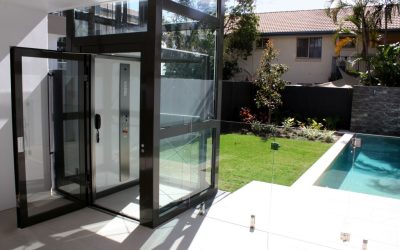
Outdoor lifts are a quiet specialty of ours. Across 30+ years and around 1,200 lifts sold each year, external installs have become something we do often and do well — on sloping blocks, raised entrances, decks and poolside areas. Each one is engineered for the Australian climate, so the ride stays smooth and reliable year after year.
An outdoor home lift is a normal enclosed residential lift installed in a weatherproof shaft on the outside of your house. The cabin is identical to an indoor lift – the external shaft does the weather work. It is not an open-air platform lift, which is a different product altogether.
In Australia, external lifts for houses almost always mean the first kind: a fully enclosed lift cabin travelling inside a sealed shaft that stands against (or just off) the outside of the home. Any lift in our residential lift range can be installed this way, because the lift itself never meets the weather – it lives inside a dry, sealed shaft, exactly as it would indoors. The engineering questions all belong to the shaft: what it’s made of, how it’s sealed, and how it’s tied into the house.
The other thing people sometimes mean is an outdoor platform lift – an open platform with no cabin, operated by holding a button, typically used for short rises like a deck or an entry porch. To be upfront: Lift Shop doesn’t sell platform lifts. If your project genuinely needs a short-rise open platform, a dedicated access-equipment supplier is the right call. But if you want a real lift – full cabin, automatic operation, multiple floors, and something that looks like it belongs on an architect’s drawings – an enclosed home lift in an external shaft is the product this page is about.
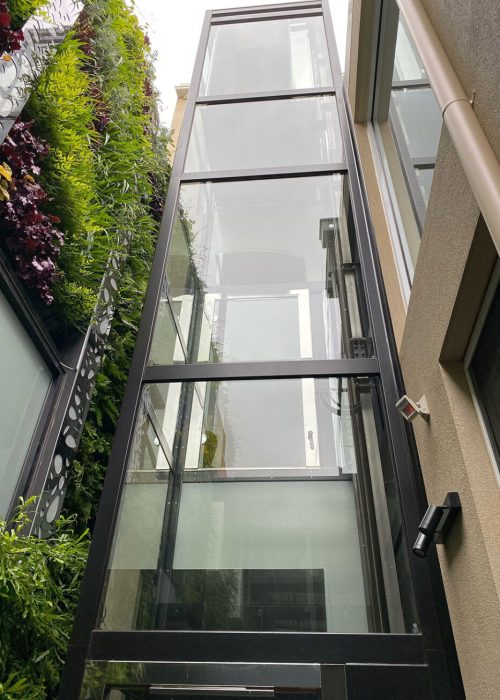
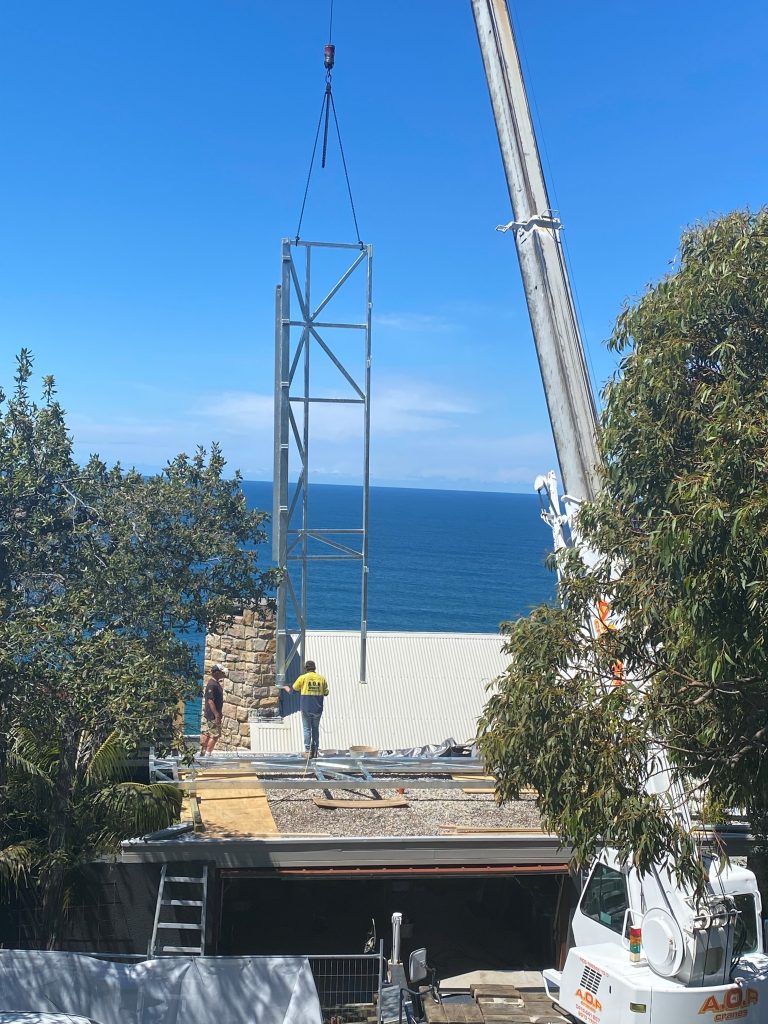
The shaft, not the lift, is what makes an outdoor installation work. Your builder constructs a sealed external shaft – glass, steel, masonry or clad timber – to Lift Shop’s engineering drawings, with weatherproof landing doors, pit drainage and flashing details resolved before the lift goes in.
It works the same way as the rest of your building envelope: the shaft is designed and built weathertight, and the lift is installed into it afterwards. In most cases your builder constructs the shaft following Lift Shop’s engineering drawings and requirements – our guide to lift shaft design and construction explains the process, the dimensions and who does what. Where the site suits it, Lift Shop can also supply a pre-engineered, self-supporting internal steel structure that your builder then encloses and weatherproofs in the finish of your choice.
Glass deserves a special mention, because it’s the most requested outdoor look. A glass external shaft keeps views and daylight while giving the lift full weather protection, and many builders design their own glass enclosures around our engineering requirements for a fully customised architectural finish. One of our Sunshine Coast installs shows how much smart positioning helps too: the full glass shaft was placed beneath the home’s overhanging rooflines, naturally shielded from harsh sunlight and driving rain. We cover the design side in depth in our glass home lifts guide (coming soon).
| External shaft style | The look | Weather notes | Best suited to |
|---|---|---|---|
| Powdercoated steel frame with glass cladding | A crisp, architectural feature – frame colour to any RAL, glass panels between | Powdercoat protects the steel; glass sheds rain and wipes clean | Garden-feature lifts and contemporary homes |
| Masonry or block | Rendered or face finish to match the house | The most robust option in fully exposed positions; naturally weathertight | Exposed sites and solid-construction homes |
| Timber-framed, clad and sealed | Clad to match weatherboard or lightweight construction | Flashed and sealed like any external wall of the home | Matching an existing lightweight home |
Whichever style suits your home, the shaft is documented before it’s built: Lift Shop issues the engineering drawings, your builder prices and constructs the enclosure, and our technicians install the lift once the shaft is weathertight.
Salt air is hard on anything built near the ocean, and an external lift shaft is no exception. For coastal homes we lean on powdercoated steel, brushed stainless profiles and glass – finishes chosen because they stand up to salt spray and wash down easily – plus a regular service schedule.
Our outdoor garden lift in Coogee is the working example: a few streets from the Pacific, its external shaft is powdercoated steel in Traffic Black Smooth Matt (RAL 9017) with black and fume glass cladding and brushed stainless steel profiles – a materials palette picked to look sharp and to cope with a coastal address. Three habits keep any coastal shaft looking new: choose finishes that shrug off salt (powdercoat, stainless, glass), rinse the enclosure down the way you would a coastal balustrade, and keep the lift on its normal service program. Lift Shop is Australian-owned, locally engineered and serviced, so the technician who maintains a beachside lift is ours – not a subcontractor three suburbs from the coast.
Coastal conditions are familiar territory for us. Lift Shop has installed 350+ lifts on the Gold Coast and 250+ on the Sunshine Coast – two of the saltiest, sunniest addresses in the country – alongside beachfront installs across Sydney’s eastern suburbs.
Visit one of our luxury showrooms to explore your options for outdoor lifts. See, touch and experience the difference of a Lift Shop elevator in person - and find the perfect fit for your home.
Speak with a lift specialist and get tailored advice for your outdoor lift - matched to your site, space and home.
A small external lift can be the answer when there is simply no room inside. Moving the shaft outside frees your floor plan entirely: the lift needs a pit as shallow as 150 mm, and the shaft can tuck into a side setback or a quiet corner of the garden.
This is the move that rescues terrace renovations, narrow blocks and duplexes. Instead of surrendering a wardrobe-sized piece of every floor, the shaft stands outside the wall and the lift opens straight into the house at each level. Standard cabins start from 1000 mm x 1000 mm internally, so the whole structure stays genuinely small – one Sydney client tucked an external glass shaft into a quiet corner of the garden where it harmonises with the planting rather than the architecture. Space-saving options like through-car doors (in one side, out the other) make narrow landings workable too.
If inside space is the whole problem you’re solving, our guide to small home lifts covers the smallest footprints in the range, floor by floor.
Most clients invest between $49,000 and $120,000, fully installed, and installing the lift outdoors does not change the lift price. The variable is the external shaft, which is builder’s work – priced by your builder and driven by material and site. For the full picture, see our cost guide.
The lift itself is priced like any Lift Shop installation, and outdoor projects follow the same no-surprises quoting as everything else we do. The shaft is quoted separately by your builder because it’s construction: a rendered block shaft and a powdercoated steel-and-glass enclosure are very different builds, and your builder prices them from our engineering drawings. For current lift pricing, inclusions and the questions worth asking, start with how much a home lift costs. how much a home lift costs in Australia.
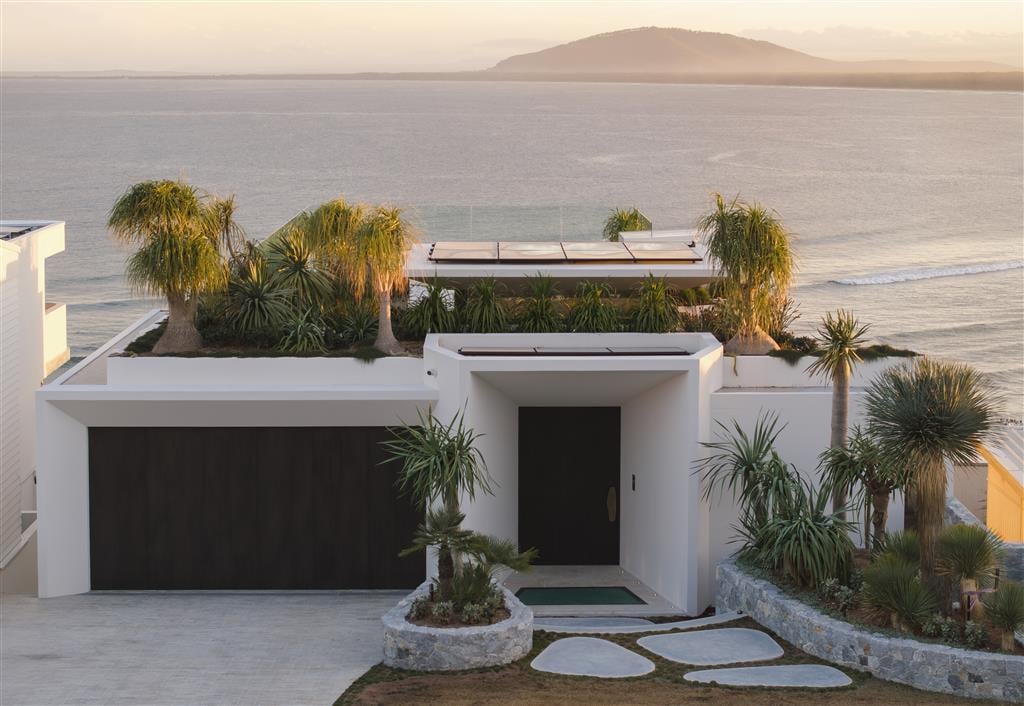
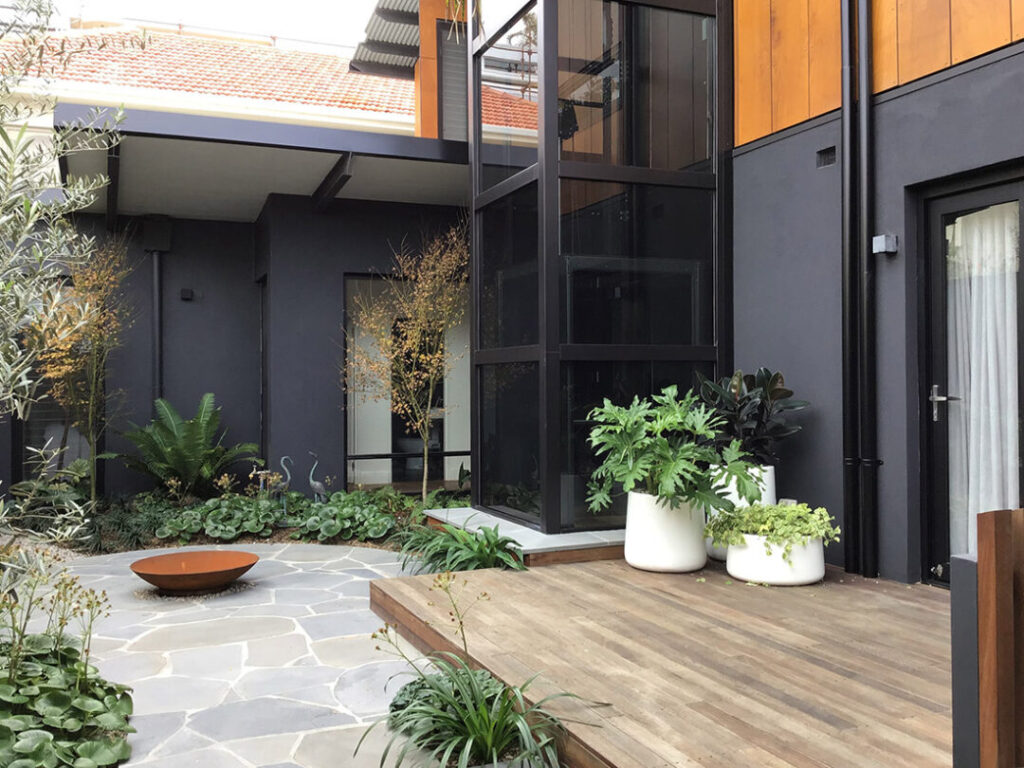
These are real Lift Shop outdoor installations, not renders: an E Series lift in a black external shaft that has become the feature of a Coogee back garden, a glass-shaft lift tucked into a corner of a Sydney garden, and a full glass shaft retrofitted to a Sunshine Coast home.
A stunning feature in a Coogee back garden. An E Series lift in an external shaft of powdercoated steel and glass, finished in Traffic Black – the client chose an outdoor install deliberately, and the lift now ties the home together inside and out. Read the case study: Outdoor garden home lift in Coogee.
A glass shaft in a quiet garden corner, Sydney. On an estate-sized property, an external glass shaft was tucked discreetly into a corner of the garden – polished stainless door below, panoramic glass door above, and garden views from inside the cabin. Read the case study: External glass-shaft lift in a Sydney garden.
A full glass shaft retrofitted on the Sunshine Coast. An E Series lift added to an existing elevated Queensland home, its almost entirely transparent glass shaft positioned beneath the overhanging rooflines so it’s naturally shielded from harsh sunlight and driving rain. Read the case study: Sunshine Coast glass-shaft retrofit.
Straight answers on outdoor and external home lifts - weather protection, engineering, costs and installation across Australia.
Yes. An outdoor home lift is a standard enclosed residential lift installed in a weatherproof external shaft attached to the house. Your builder constructs the shaft - glass, steel, masonry or clad timber - to Lift Shop's engineering drawings, and the lift is installed once the shaft is weathertight. Lift Shop has completed external installs from Sydney gardens to elevated Queensland homes.
The weather protection comes from the shaft, not the lift. The external shaft is built and sealed like any other part of your home's envelope, so the lift equipment and cabin sit in a dry enclosure exactly as they would indoors. Smart siting helps too - one of our Sunshine Coast installs sits beneath the home's rooflines, naturally shielded from harsh sun and driving rain.
Coastal installs come down to finishes and upkeep. Powdercoated steel, brushed stainless profiles and glass are the coastal workhorses - they resist salt spray and wash down easily. From there it's the same routine as any beachside balustrade: an occasional rinse, plus the lift's normal service schedule. Lift Shop is Australian-owned, locally engineered and serviced, so coastal servicing is handled by our own technicians.
No - Lift Shop doesn't sell platform lifts, and we'd rather tell you that than talk around it. An outdoor platform lift is an open, hold-to-run platform generally used for short rises like a deck or porch, and a dedicated access-equipment supplier is the right source for one. What Lift Shop installs is a fully enclosed home lift inside a weatherproof external shaft - a true multi-floor lift with a cabin, which suits most homes better once the travel is more than a metre or two.
Less than most people expect. The pit can be as shallow as 150 mm, standard cabins start from 1000 mm x 1000 mm internally, and because the shaft stands outside the wall, it takes no interior floor space at all. External shafts routinely tuck into side setbacks and garden corners on tight blocks.
Your builder, in most cases, working from Lift Shop's engineering drawings and requirements. Where it suits the site, Lift Shop can supply a pre-engineered self-supporting steel structure that your builder encloses and weatherproofs. Either way the shaft is fully documented before construction starts - our lift shafts guide explains the process step by step.
Most clients invest between $49,000 and $120,000, fully installed, and an outdoor location doesn't change the lift's price. The external shaft is builder's work, quoted by your builder from our engineering drawings, and varies with the material and the site. Our home lift cost guide covers current pricing and what's included.
Yes - an external shaft is often the least disruptive way to retrofit a lift, because the structure is built outside the existing walls and the lift opens into the house at each floor. Our Sunshine Coast glass-shaft retrofit is exactly this: a lift added to a pre-existing elevated home without rebuilding its interior.
For waterfront and coastal homes, grade 316 stainless steel is recommended and is available on request. See how coastal installs at Coogee and Noosaville were finished.
Prices move. Your quote will not. Lock it in today and it holds for 12 months.
Or talk it through with a Lift Shop consultant on 1800 440 714